The Myth of Laziness: Debunking the Welfare Stereotype
The claim that welfare makes people lazy is a tired talking point that wilts under scrutiny. It’s an assertion that ignores data, misrepresents recipients, and plays more to prejudice than to policy. In reality, welfare programs do not breed laziness — they often do the opposite: help people survive, stabilize, and strive for better lives. The laziness myth is not only wrong, it’s harmful. It perpetuates stigma, informs bad policy, and undermines efforts to address poverty effectively.
Study after study has shown that most welfare recipients are either working, actively seeking work, or physically unable to work. The Center on Budget and Policy Priorities (CBPP) notes that among nonelderly, non-disabled adults receiving Supplemental Nutrition Assistance Program (SNAP) benefits, the majority are employed within a year of receiving aid. TANF (Temporary Assistance for Needy Families), one of the most restrictive cash welfare programs in the U.S., has strict work requirements. Despite this, the average duration of TANF benefits is less than two years. If welfare were a hammock, people wouldn’t be getting off it so quickly.
Alaska’s Permanent Fund Dividend gives all residents an annual cash payment just for living in the state. If free money breeds laziness, Alaska should be a case study in sloth. Instead, employment rates remain comparable to national averages, and studies (Jones & Marinescu, 2018) have found little to no negative impact on work incentives.
International comparisons further shred the “welfare = lazy” argument. In Nordic countries like Denmark and Sweden, where social safety nets are far more generous than in the U.S., labor force participation remains high. A 2020 OECD report found that Sweden had a higher employment rate (67.2%) than the U.S. (62.5%). Generous welfare clearly doesn’t paralyze ambition — in fact, it often enables it by removing barriers to participation like unaffordable childcare or lack of healthcare.
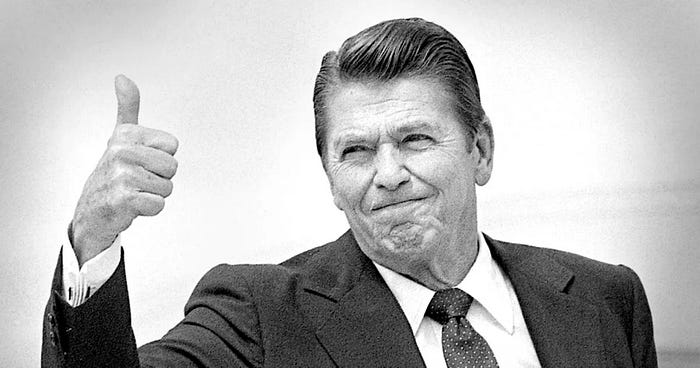
Opponents of welfare often conjure up caricatures: the so-called “welfare queen,” a term rooted in racist narratives started by none other than the tyrant himself, Ronald Reagan. And then there’s the lazy millennial lounging on the government’s dime trope, a Boomer favorite that is getting as old as Reagan’s antics from 1976. These are not reflections of reality; they’re political cartoons, and they’re bad ones at that. Actual welfare recipients are families, single parents, disabled individuals, and workers in low-wage jobs that don’t pay enough to live on. According to the Economic Policy Institute, roughly 60% of people receiving public assistance are in working families.
Here’s what’s truly lazy: blaming the poor for being poor instead of confronting a broken system. It’s easier to accuse someone of freeloading than to admit that full-time jobs often pay poverty wages, or that housing, education, and healthcare costs have soared far beyond the reach of millions. The welfare-as-laziness argument is a convenient way to redirect attention from structural inequality to personal accountability, even when there is nothing to be accountable for.
Moreover, research suggests that a secure safety net can actually foster risk-taking and upward mobility. When people aren’t terrified of falling into destitution, they’re more likely to pursue education, change jobs, or start businesses. The 2021 expansion of the Child Tax Credit is a case in point. It reduced child poverty by nearly half while increasing employment among low-income parents (Collyer et al., 2022). When that program was cut, poverty snapped back like a rubber band.
The narrative that welfare breeds dependence is not just wrong, it’s weaponized. It has been used to gut public assistance programs under the guise of reform. In 1996, the welfare reform bill signed by President Clinton imposed work requirements and time limits on benefits. The result? TANF became less about lifting people out of poverty and more about pushing them through bureaucratic hoops. Caseloads dropped, but poverty didn’t. In many states, the poorest families were left with no help at all.
If we’re serious about reducing poverty, the first step is to drop the moral posturing and face the facts. Welfare isn’t the problem; it’s often the only thing standing between people and homelessness, hunger, or despair. The real problem is an economy that relies on low-wage labor and a political culture that vilifies the poor while subsidizing the wealthy.
In short, welfare doesn’t make people lazy. It makes it possible for people to live, to try, and sometimes, if they’re lucky, to thrive. The idea that assistance saps motivation is not borne out by evidence — it’s borne out by ideology. It’s an old, tired, and frankly stupid ideology, and like Reagan’s fanbase, it’s time we retired it for good.
Works Cited:
State Child Tax Credits and Child Poverty: A 50-State Analysis
 Den Elliot
Leave a comment